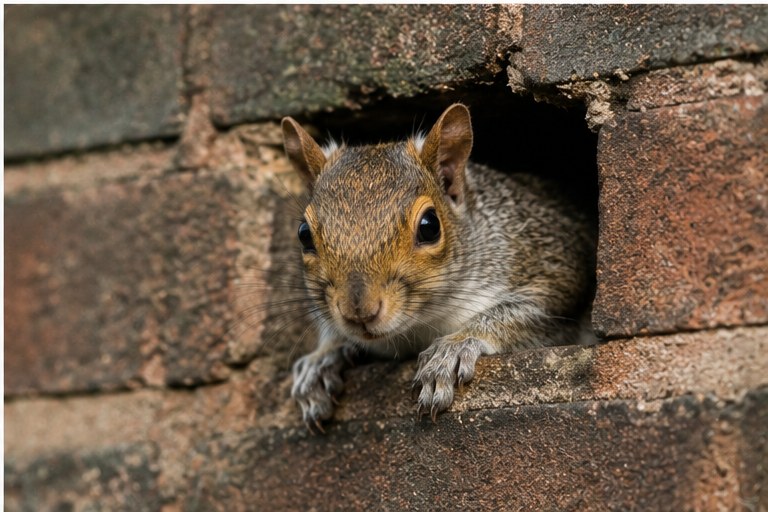
Grey squirrels are a familiar sight in gardens across Sopwell, but when they find their way into a loft space, they can quickly become a source of disruption and damage. Lofts offer squirrels a warm, sheltered space that closely resembles a natural nesting site, making them an attractive target for a family group, particularly during the colder months of the year when other shelter is harder to come by outdoors. Recognising the signs early can help limit the amount of damage caused to your roof space.
Signs Squirrels Are in Your Loft
The most common sign of squirrels in a loft is noise, particularly scurrying, scratching, or thumping sounds coming from above, often most noticeable in the early morning or late afternoon when squirrels are most active. You may also notice gnaw marks on timber beams, joists, or cabling, as squirrels have a constant need to gnaw in order to keep their teeth in check throughout their lives. Other clues include debris such as leaves, twigs, and insulation pulled into piles suggesting nest building, visible entry points where roof tiles, fascia boards, or soffits have been damaged, and droppings scattered around the loft space.
Other Clues to Look For
- Debris such as leaves, twigs, and insulation pulled into piles, suggesting nest building
- Visible entry points where roof tiles, fascia boards, or soffits have been damaged
- Unusual smells, particularly if a nest has been established for some time
- Squirrels seen repeatedly entering or leaving the same point on the roofline
Why Squirrels in the Loft Are a Concern
Beyond the noise and disturbance, squirrels can cause genuine structural issues by gnawing through timber, electrical cabling, and insulation throughout the roof space. This kind of damage is not always immediately visible, but can pose fire and safety risks over time if left unaddressed for too long. Squirrels may also use the same loft space to raise young, meaning a single entry point can lead to a recurring problem if it is not properly resolved. Simply blocking an entry point without confirming the loft is clear can trap animals inside, so effective removal involves correctly identifying how squirrels are gaining access, dealing with any animals present, and then securing the property to prevent them returning.
It's also worth having your loft checked periodically even if you haven't heard obvious noises, since squirrels can sometimes use a roof space quietly for a while before their presence becomes more noticeable through damage or sound. Catching a problem early generally means less repair work is needed once the animals have been removed, and helps protect valuable stored items kept in the loft space. Trimming back branches that overhang the roofline can also make it harder for squirrels to gain access in the first place.
Acting on the early warning signs helps limit the damage caused and gets the animals safely and humanely removed sooner.
If you suspect grey squirrels have moved into your Sopwell loft, Atlas Pest Connect St Albans can help. Call 01727 400154 for expert advice and a thorough assessment of your property.
Need Squirrel Control in Sopwell?
Atlas Pest Connect St Albans provides squirrel control across Sopwell and the surrounding area. Get in touch for a free, no-obligation quote.