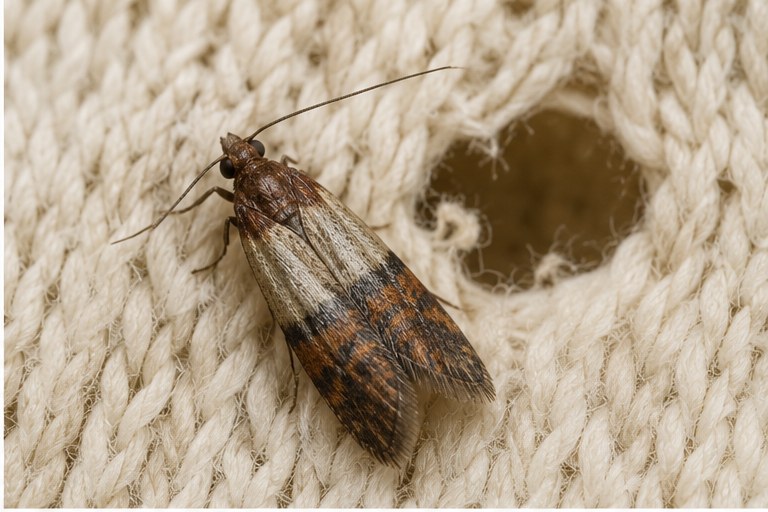
Textile moths, sometimes called clothes moths, are a frustrating pest for Bricket Wood households, quietly damaging clothing, carpets and soft furnishings long before most people even realise there is a problem in the first place. Unlike many pests, it is not the adult moths themselves that cause the damage, but their larvae, which feed on natural fibres such as wool, silk, cotton and fur, often deep within folded or stored items that are rarely handled or checked over throughout the year. A small, seemingly isolated hole can be the first visible sign of a much wider problem developing quietly out of sight.
Spotting the early signs and where moths hide
Textile moth activity is often first noticed as small, irregular holes in jumpers, coats or blankets, particularly items that have been stored away for a while without being disturbed or aired. You may also see fine silky webbing or small case-like larval casings in carpet edges, under furniture, or within wardrobes and drawers. Adult moths themselves are small and pale, often seen fluttering weakly rather than flying strongly, and tend to avoid bright light altogether, preferring dark, undisturbed corners such as wardrobes, carpet edges under heavy furniture, and stored winter blankets or rugs left folded for long periods of time. Natural fibre rugs, upholstered chairs and even felted decorations can also provide a suitable food source if left unchecked for long enough.
Steps to reduce an infestation
- Vacuum carpets thoroughly, particularly along edges and under furniture that is rarely moved
- Wash or dry-clean affected clothing at a suitably high temperature to kill larvae
- Regularly air and inspect stored woollens rather than leaving them undisturbed for months
- Check dark, rarely used wardrobes and drawers for early signs of activity
Why moths often return despite cleaning
One of the most frustrating aspects of textile moths is how easily an infestation can be missed in its early stages, allowing larvae to spread from one item or room to another before anyone notices the damage building up. Cleaning visible damage away does not always address eggs or larvae hidden deep within carpets, furniture padding or folded fabrics, which is why many households find the problem recurring even after what feels like a thorough clean of every affected room. Larvae can also survive for some time without an obvious food source nearby, making them particularly persistent once properly established in a property, and capable of moving on to a fresh item once one source is exhausted.
If moth damage keeps appearing despite your best efforts, or the infestation has spread across multiple rooms or items, a professional inspection can identify every affected area and apply treatment that reaches larvae and eggs missed by household cleaning alone, giving you a clearer picture of exactly how far the problem has spread. This kind of thorough, room-by-room approach is generally far more effective than repeated spot treatments applied only to the areas where damage happens to be visible. If textile moths are damaging belongings in your Bricket Wood home, get in touch with Atlas Pest Connect St Albans on 01727 400154 for expert identification and effective, lasting treatment.
Need Textile Moth Control in Bricket Wood?
Atlas Pest Connect St Albans provides textile moth control across Bricket Wood and the surrounding area. Get in touch for a free, no-obligation quote.