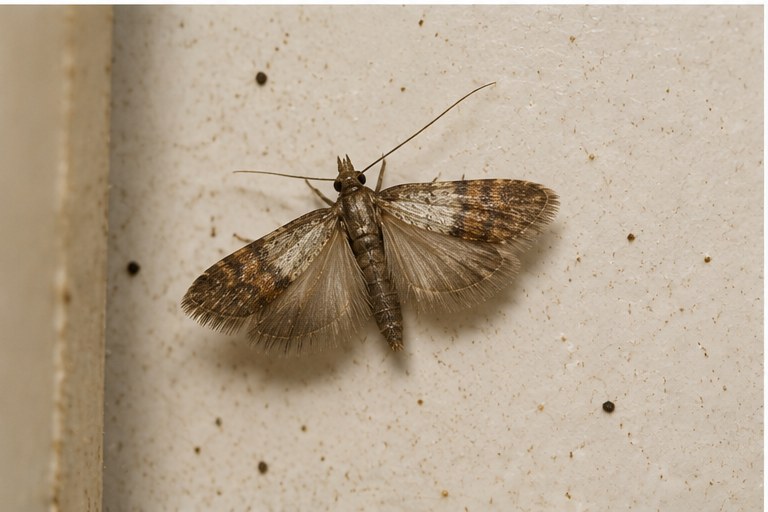
Textile moths, often referred to as clothes moths, can cause quiet but significant damage in Welham Green homes long before most people realise they have a problem. Unlike many household pests, it is not the adult moth that causes the damage but its larvae, which feed on natural fibres.
Damage to Fabrics
The clearest sign of a textile moth infestation is unexplained holes or thinning patches in clothing, carpets, rugs, upholstery and blankets, particularly items made from wool, silk, feathers or fur. Damage is often found in areas that are undisturbed for long periods, such as folded jumpers at the back of a drawer, coats in a rarely used wardrobe, or carpet under heavy furniture.
Signs Beyond the Damage Itself
- Small silken threads or webbing on fabric surfaces
- Tiny, sand-like droppings the same colour as the fabric being eaten
- Small cream-coloured larvae or their empty casings within fibres
- Adult moths, typically small and golden-brown, seen fluttering low and erratically rather than towards light
Where Infestations Often Start
Textile moths favour dark, undisturbed spaces. Wardrobes, chests of drawers, under-bed storage, loft spaces and behind furniture are all common starting points. Natural fibre items that are stored for long periods without being aired, cleaned or moved are particularly at risk, as the larvae are rarely disturbed and can feed undetected for weeks or months.
What to Do if You Suspect an Infestation
If you notice signs of textile moths, it is worth checking nearby items thoroughly, as an infestation can spread from one garment or textile to others stored close by. Regularly airing and inspecting stored clothing, vacuuming carpets and upholstery thoroughly, particularly along skirting boards and under furniture, and avoiding storing natural fibre items in dark, undisturbed spaces for extended periods can all help limit the spread.
Because larvae can be difficult to spot and infestations often extend further than the visible damage suggests, a proper inspection is the best way to understand the true scale of the problem and prevent it recurring.
Preventing Future Infestations
Once a textile moth problem has been resolved, ongoing vigilance helps prevent it recurring. Rotating and airing stored clothing periodically, using breathable garment bags rather than sealed plastic for natural fibre items, and vacuuming wardrobes and drawers as part of a regular cleaning routine can all reduce the likelihood of larvae establishing themselves again. Being particularly attentive after bringing second-hand clothing, rugs or furniture into the home is also worthwhile, as items can occasionally carry eggs or larvae from elsewhere.
Textile Moths Versus Pantry Moths
It is worth noting that textile moths are a different pest from the small moths sometimes found around kitchen cupboards, which are typically drawn to dried food rather than fabric. Confirming which type of moth you are dealing with helps ensure the right approach is taken, since treating a fabric infestation and a food-related infestation involves different considerations and different areas of the home.
If you think textile moths may be affecting your Welham Green home, contact Atlas Pest Connect St Albans on 01727 400154 for expert advice and an effective plan to protect your fabrics and belongings.
Need Textile Moth Control in Welham Green?
Atlas Pest Connect St Albans provides textile moth control across Welham Green and the surrounding area. Get in touch for a free, no-obligation quote.