
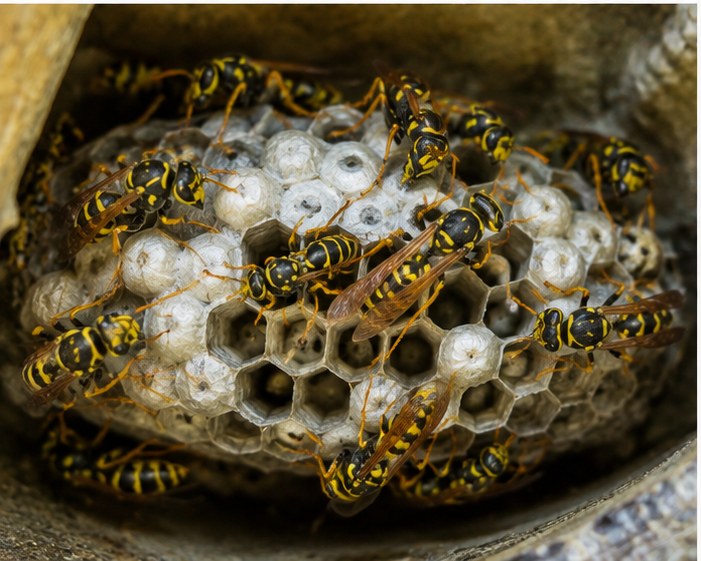
Wasps become increasingly noticeable across North Watford gardens and properties as temperatures rise through spring and summer, with nest activity typically peaking later in the season. While the occasional wasp passing through your garden is nothing to worry about, a build-up of consistent activity in one particular area often points to an active nest nearby. Knowing how to identify the signs can help you decide when it is time to take action, and when it is best left well alone.
Watch for consistent flight paths
One of the clearest signs of an active nest is a steady stream of wasps flying in and out of the same specific spot, whether that is a gap under the eaves, a hole in the ground, an air brick, or a cavity in a wall. Unlike the occasional wasp investigating your garden, this kind of repeated, focused activity indicates that wasps are travelling to and from a nest to bring back food or building material, and it tends to become more noticeable as the colony grows larger through the season.
Common nesting locations around the home
- Loft spaces and roof voids, where warmth and shelter are ideal for nest building
- Wall cavities, particularly around air bricks or damaged pointing
- Sheds, garages, and outbuildings, especially in undisturbed corners
- Underground burrows or old rodent holes in lawns and flower beds
- Behind soffits, fascias, or under decking where access is largely hidden
Other signs of an active nest, and why you should not disturb it
As well as watching flight patterns, listen for a faint buzzing or rustling sound coming from inside a wall cavity or loft space, particularly on warmer days when the colony is most active. You may also notice small amounts of grey, papery material accumulating nearby, as wasps chew wood fibres mixed with saliva to build their nests. Wasps can become defensive if a nest is disturbed, and a colony can include a large number of individuals capable of stinging repeatedly, so attempting to block an entrance or remove a nest without the right knowledge can increase the risk of stings considerably.
It is also worth keeping children and pets away from any area where you suspect wasp activity until it has been properly checked, since curiosity around a nest entrance is one of the more common ways people are stung unexpectedly. Being cautious around sheds, compost bins, and garden features that have not been used for a while is a sensible habit during the warmer months, particularly if wasps have been noticed nearby recently. Outdoor bins and fallen fruit can also attract foraging wasps in late summer, which is worth bearing in mind if activity in your garden seems to increase around these areas as the season goes on.
If you have noticed wasps consistently entering and leaving the same area of your North Watford home, it is worth getting the situation checked properly rather than approaching it yourself. Atlas Pest Connect St Albans can confirm whether there is an active nest and advise on the safest next steps. Call us today on 01727 400154.
Need Wasp Control in North Watford?
Atlas Pest Connect St Albans provides wasp control across North Watford and the surrounding area. Get in touch for a free, no-obligation quote.