
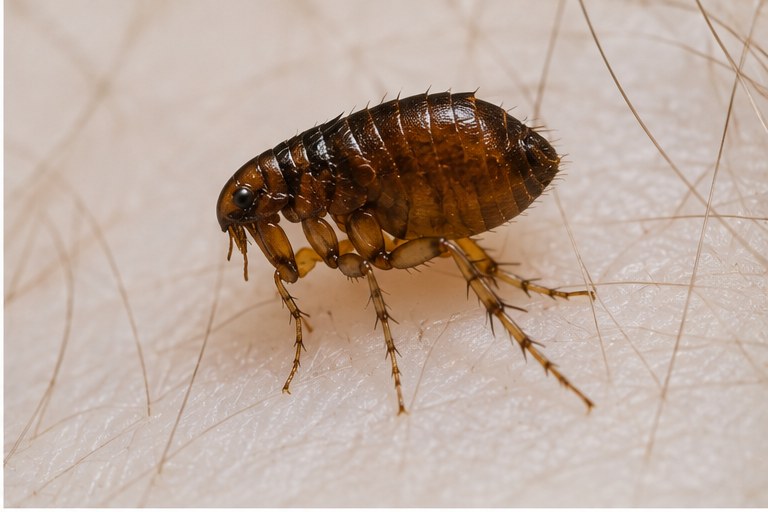
Fleas are a common concern for households across Colney Heath, particularly those with pets, though it is entirely possible to end up with a flea problem even without cats or dogs in the home. These small, fast-moving insects can be brought indoors on clothing, footwear, or by wildlife visiting the garden, and once established, they can multiply quickly within carpets, soft furnishings, and bedding.
Physical signs of fleas
Fleas are small, dark brown, and wingless, typically around two to three millimetres in length, with a flattened body shape that helps them move easily through fur or fibres. They are known for their powerful jumping ability, so you may notice small insects leaping away suddenly when walking across carpets or when a pet is disturbed from resting.
Bites and irritation
Flea bites often appear as small, itchy red marks, commonly around the ankles and lower legs in humans, and can cause noticeable scratching and discomfort in pets. If several household members are experiencing unexplained bites, particularly after spending time on carpeted floors, this can be a strong indicator of a flea problem.
Other signs to check for
- Small dark specks in pet bedding or carpets, which may be flea dirt (digested blood)
- Pets scratching, biting at their fur, or grooming more than usual
- Tiny pale eggs visible in pet bedding or along carpet fibres
- Increased flea activity in warm, humid weather, when breeding tends to accelerate
Where fleas tend to hide
Fleas favour warm, sheltered environments close to a blood source, which is why carpets, rugs, pet bedding, and soft furnishings are common hotspots. In a Colney Heath home, fleas can also be introduced from the garden, particularly if foxes, hedgehogs, or other wildlife pass through the area, so an infestation is not always linked to a household pet.
Understanding the flea life cycle
Fleas go through several life stages, including eggs, larvae, pupae, and adults, and only the adult stage is typically seen moving around a home. Eggs and larvae often fall deep into carpet fibres or soft furnishings, out of sight, which is why a flea problem can seem to disappear temporarily only to return a short time later. Pupae are particularly resilient and can remain dormant for extended periods, hatching once they detect vibration, warmth, or the presence of a nearby host, which explains why fleas sometimes appear suddenly after a period with no activity, such as returning from a holiday.
What to do next
Regular vacuuming, washing pet bedding at a high temperature, and keeping pets on a suitable flea prevention routine can all help reduce the risk of an infestation taking hold. However, because flea eggs and larvae can survive in carpets and soft furnishings for some time, a thorough approach is often needed to fully break the flea life cycle once an infestation is established.
If you suspect fleas in your Colney Heath home and the problem is not clearing up, Atlas Pest Connect St Albans can help identify the source and recommend an effective plan. Call us on 01727 400154 for friendly, expert advice.
Need Flea Control in Colney Heath?
Atlas Pest Connect St Albans provides flea control across Colney Heath and the surrounding area. Get in touch for a free, no-obligation quote.