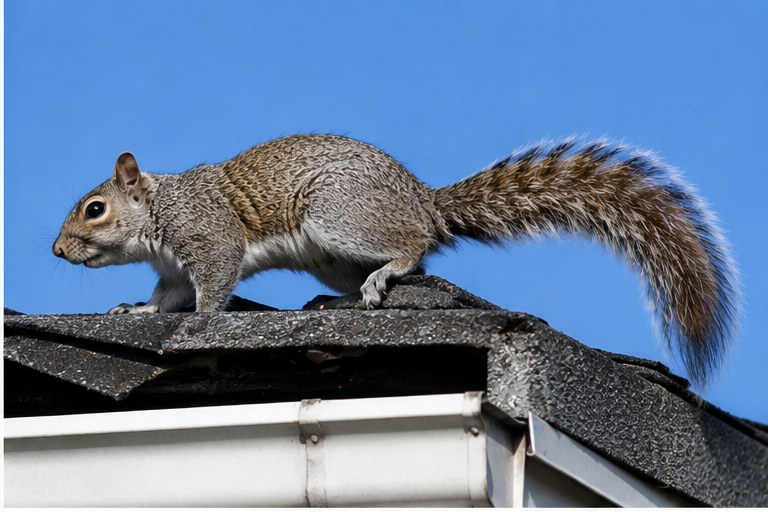
Grey squirrels are a familiar sight in gardens and parks around Colney Heath, but when they find their way into a loft space, they can quickly become a source of noise, damage, and disruption. Because loft spaces offer warmth, shelter, and safety from predators, they are an attractive nesting spot for squirrels, particularly during colder months and the breeding season.
Noises that suggest squirrel activity
One of the most common signs of squirrels in a loft is noise, particularly scratching, scurrying, or rolling sounds coming from above ceilings, most often heard early in the morning or around dusk when squirrels are most active. Unlike the quicker, lighter movements associated with mice, squirrel activity tends to sound heavier and more deliberate, reflecting their larger size.
Physical signs to look for
- Gnaw marks on timber beams, joists, or electrical cabling within the loft space
- Torn insulation, which squirrels often shred to build nests
- Entry points such as damaged fascia boards, gaps under roof tiles, or holes around the roofline
- Droppings, which are typically larger than those of mice or rats and often found clustered in one area
Checking the exterior of your property
Grey squirrels are excellent climbers and can access a roof via overhanging branches, drainpipes, or trellising close to the building. Inspecting the outside of your Colney Heath property for damaged roof tiles, gaps in soffits, or worn areas around the roofline can help identify how squirrels might be getting in, which is a key step in resolving the problem long term.
Why squirrels in a loft need addressing promptly
Left unaddressed, squirrels can cause significant damage to loft insulation, timber, and electrical wiring, and their persistent gnawing can create wider problems if wiring is exposed. Squirrels are also protected under UK wildlife legislation in certain respects, which means the way they are dealt with needs to be handled correctly and responsibly.
The breeding season and why timing matters
Grey squirrels typically have two breeding periods each year, and a loft that offers warmth and shelter can be particularly appealing to a female looking for a safe place to raise young. Once a nest, known as a drey, has been established within a loft space, activity can become more frequent and persistent, making early identification even more valuable. Addressing the problem before young squirrels are born can make the process considerably more straightforward for everyone involved, including the animals themselves.
Distinguishing squirrels from other loft visitors
Because several different animals can find their way into a loft space, it helps to consider the timing and nature of the noise as well as its volume. Squirrels are most active during daylight hours, particularly early morning and late afternoon, whereas many other loft-dwelling pests are more active overnight. The heavier, more deliberate sound of a squirrel moving across joists is also generally easier to distinguish from the lighter, quicker scuttling associated with smaller rodents, though a professional inspection is the most reliable way to confirm exactly what you are dealing with.
Getting professional support
If you suspect grey squirrels have made a home in your loft, a professional inspection is the best way to confirm activity, assess any damage, and identify entry points that need to be addressed. This ensures the problem is dealt with thoroughly and reduces the likelihood of squirrels returning in future, protecting your loft insulation, timber, and wiring from further disruption.
For expert help identifying and resolving squirrel activity in your Colney Heath loft, contact Atlas Pest Connect St Albans on 01727 400154.
Need Squirrel Control in Colney Heath?
Atlas Pest Connect St Albans provides squirrel control across Colney Heath and the surrounding area. Get in touch for a free, no-obligation quote.