
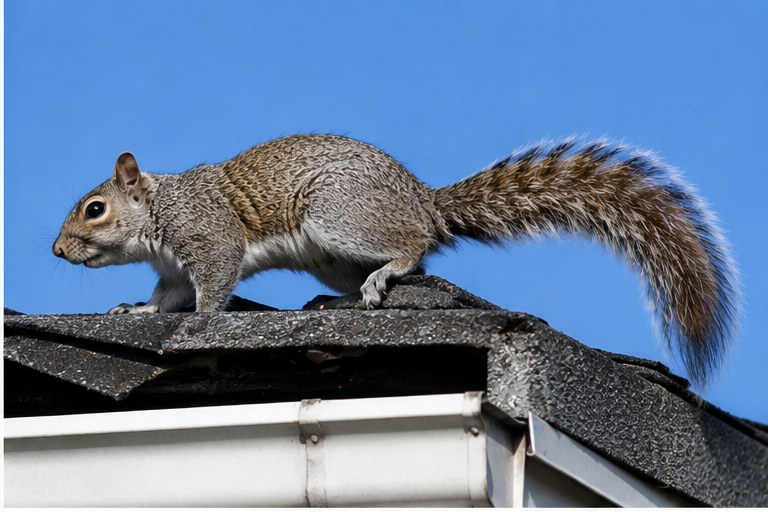
Grey squirrels are a familiar sight in gardens across Shenley, but when they find their way into a loft space, they can cause a surprising amount of disruption and damage to a property. Roofs offer an appealing combination of shelter, warmth, and safety from predators, making them a tempting nesting spot for squirrels, particularly during colder months when they are looking for somewhere secure to settle for an extended period. Once a squirrel has found a comfortable spot in a loft, it will often return to the same area repeatedly and may even bring young into the space, so early identification makes a real difference to how quickly the problem can be resolved.
Common Signs of Squirrels in the Roof
Because squirrels are most active during the day, unlike many other rodents, the noises and evidence they leave behind often have a fairly distinctive pattern that can help distinguish them from other loft visitors such as mice or nesting birds. Listening for activity at particular times of day can be a useful first step in working out what you are dealing with.
Why Squirrels in the Loft Are a Concern
Squirrels have strong teeth that need constant wear, so they will readily gnaw on timber, roof insulation, and electrical wiring, which can create a fire risk as well as costly structural damage over time if left unaddressed. Droppings and urine can also build up in the loft space, and the noise of their movement is often disruptive, particularly early in the morning and around dusk when squirrels tend to be most active around the property.
- Scampering, running or rolling noises overhead, typically during daylight hours
- Scratching sounds as squirrels move around or gnaw at timber
- Gnawed woodwork, joists or damaged roof insulation
- Chewed electrical cabling in the loft space
- Nests made from twigs, leaves and loft insulation pulled together in a corner
- Visible entry points such as damaged fascia boards, soffits or gaps where the roofline meets brickwork
Checking Your Roofline and What to Do Next
From ground level, it is worth checking your roofline periodically for obvious gaps, damaged fascias, or torn soffit vents, as these are common access points for squirrels looking for a way into the loft space. Overhanging tree branches close to the roofline are also worth trimming back where possible, since they can give squirrels an easy route onto the property that is otherwise hard for them to reach. If you suspect grey squirrels have already moved in, it is best not to attempt to disturb or remove them yourself, since safely dealing with squirrels and identifying every access point requires proper inspection and experience. A professional assessment can confirm activity, locate entry points, and advise on the safest way to resolve the problem for good. If you're dealing with this problem on your Shenley property and would like it sorted properly, Atlas Pest Connect St Albans is on hand to help homes and businesses across the area quickly and discreetly. Our team can carry out a thorough inspection, explain exactly what is involved, and agree a plan that suits your household. Call 01727 400154 for friendly, professional advice or to arrange a visit at a time that works for you.
Need Squirrel Control in Shenley?
Atlas Pest Connect St Albans provides squirrel control across Shenley and the surrounding area. Get in touch for a free, no-obligation quote.