
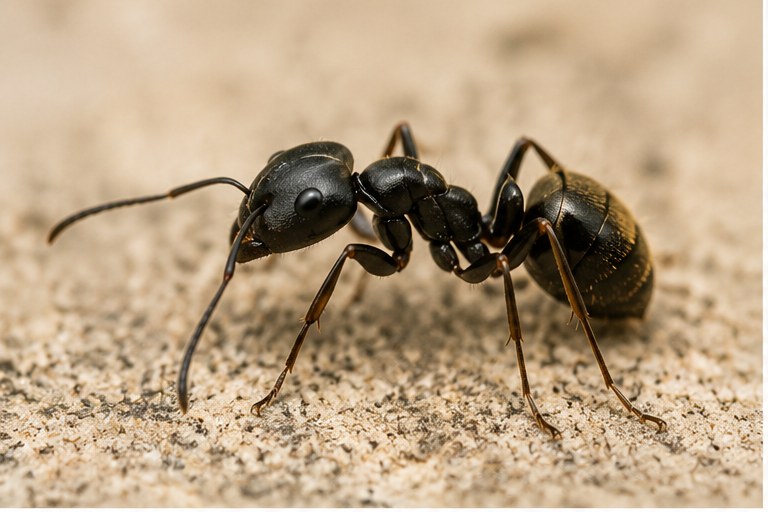
A handful of ants on a kitchen worktop can quickly turn into a steady procession marching along skirting boards and window frames. Many homes in Brookmans Park see an increase in ant activity during the warmer months, as foraging workers search for sugary or greasy food sources indoors. Understanding how to trace their route back to the nest is the first step to dealing with the problem properly, rather than just wiping away the ants you can see, only for more to appear again the following day.
Follow the Trail
Ants leave a scent trail for other workers to follow, which is why you'll often see them moving in a fairly consistent single-file line rather than wandering randomly. Take a few minutes to watch where the line leads. Trace it back along worktops, down cupboard edges, and towards gaps around skirting boards, pipework, or door thresholds. The point where the trail seems to disappear into a crack or gap is usually close to the entry point, even if the nest itself is hidden elsewhere in a wall cavity or under a floor. It can help to check at different times of day, since activity often increases in the early morning or evening as workers head out to forage.
Common Entry Points and Nest Locations
Ants are opportunistic and can squeeze through surprisingly small gaps. In older and newer properties around Brookmans Park alike, watch closely around external door and window frames, cracks in patio slabs or paths leading towards exterior walls, air bricks, gaps where pipes or cables enter the building, and spaces beneath kitchen units. Most common garden ants nest outdoors, often beneath paving, decking, or in soil close to a house wall, simply travelling indoors to forage before returning outside. In some cases, particularly where there is warmth and moisture, ants can establish a nest inside a wall cavity, under floorboards, or within loft insulation.
- Gaps around external door and window frames
- Cracks in patio slabs or paths near exterior walls
- Air bricks and pipe or cable entry points
- Spaces beneath kitchen units and behind appliances
Why Locating the Nest Matters
Simply spraying visible ants rarely solves the underlying issue, because the nest and the queen remain untouched, and foraging workers are quickly replaced. Correctly identifying whether the colony is inside or outside the property, and pinpointing the entry route, allows any treatment to be targeted at the source rather than just the symptoms. This is especially useful if the trail seems to move location after cleaning, which often means there are multiple entry points being used, or that the colony has split to form satellite nests nearby. If ant activity keeps returning, if you suspect the nest is inside a wall or cavity, or if you'd simply prefer an expert to identify the source and deal with it safely and thoroughly, Atlas Pest Connect St Albans can help residents in Brookmans Park with a careful inspection and an appropriate, targeted treatment plan. Call us on 01727 400154 for friendly, professional advice and to discuss the best way to resolve your ant problem for good.
Need Ant Control in Brookmans Park?
Atlas Pest Connect St Albans provides ant control across Brookmans Park and the surrounding area. Get in touch for a free, no-obligation quote.