
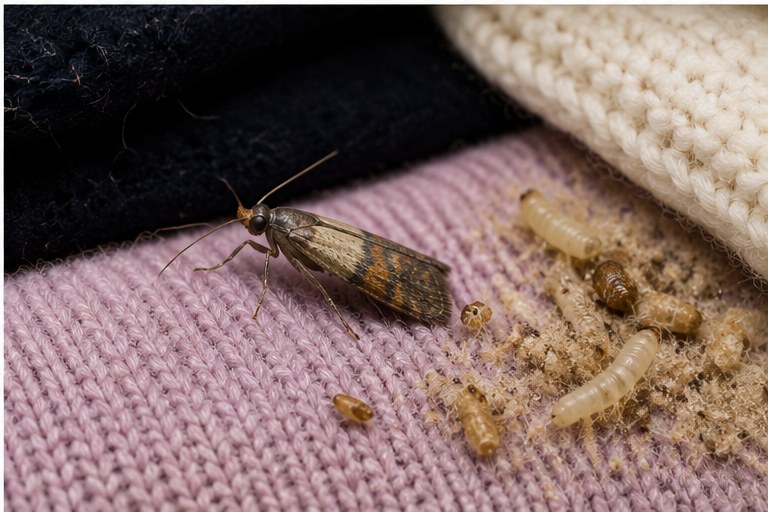
Discovering small holes in a favourite jumper or noticing patches of missing fibre in a wool carpet is a frustrating experience for any London Colney homeowner. Clothes moths are a common cause of this kind of damage, and understanding what attracts them to your home is the first step in preventing further harm to your fabrics and furnishings before the problem has a chance to spread further.
What Attracts Clothes Moths
Clothes moths are drawn to natural fibres, particularly wool, silk, feathers, and fur, which is why they so often target clothing, carpets, blankets, and upholstered furniture. Their larvae feed on keratin, a protein found in these materials, which means synthetic fabrics are far less likely to be affected and are rarely a target on their own. Items that are rarely disturbed, such as clothing stored at the back of a wardrobe or blankets kept in storage boxes, provide an ideal undisturbed environment for larvae to develop over several weeks without being noticed.
Conditions That Encourage an Infestation
- Dark, undisturbed storage areas such as wardrobes, drawers, and lofts
- Warm, relatively humid conditions that support larval development
- Natural fibre items left unwashed for long periods, as moths are attracted to residues such as skin cells and food stains
- Clutter that limits airflow and makes regular checking of stored items difficult
- Second-hand furniture, rugs, or clothing brought into the home without inspection
Signs of a Clothes Moth Problem
Look for irregular holes in wool clothing, carpets, or upholstery, along with silky webbing or small case-like larval casings tucked into fabric folds. You may also spot small pale larvae or adult moths, which are typically a light golden-brown colour and tend to avoid direct light, often fluttering out from disturbed clothing or dark corners rather than flying towards windows the way many other moths do. Checking along carpet edges under furniture, and inside rarely used wardrobes, can often reveal activity before visible damage becomes widespread.
Reducing the Risk
Regularly airing, brushing, and inspecting natural fibre items, along with periodic deep cleaning of wardrobes, carpets, and storage boxes, can help reduce the conditions clothes moths rely on to establish themselves. Rotating stored items and avoiding long periods of undisturbed darkness in wardrobes can also make a noticeable difference over time.
However, once an infestation has taken hold, larvae can be difficult to fully eliminate without a thorough, professional approach that addresses both visible damage and hidden breeding sites within carpets, upholstery, and less accessible storage areas.
When to Seek Professional Help
If you have already tried washing and vacuuming affected items but continue to notice fresh damage or ongoing activity, this is usually a sign that larvae remain in hidden areas that home cleaning alone has not reached. Carpets, especially near skirting boards and beneath heavy furniture, along with upholstered items that are rarely moved, are common places for a problem to persist unnoticed. A professional assessment can identify the true extent of an infestation across the whole property, rather than treating symptoms in isolation, giving you a clearer path towards protecting your remaining wardrobe and furnishings from further loss.
If you suspect clothes moths in your London Colney home, do not let the damage spread further. Contact Atlas Pest Connect St Albans on 01727 400154 for expert advice and effective treatment.
Need Textile Moth Control in London Colney?
Atlas Pest Connect St Albans provides textile moth control across London Colney and the surrounding area. Get in touch for a free, no-obligation quote.