
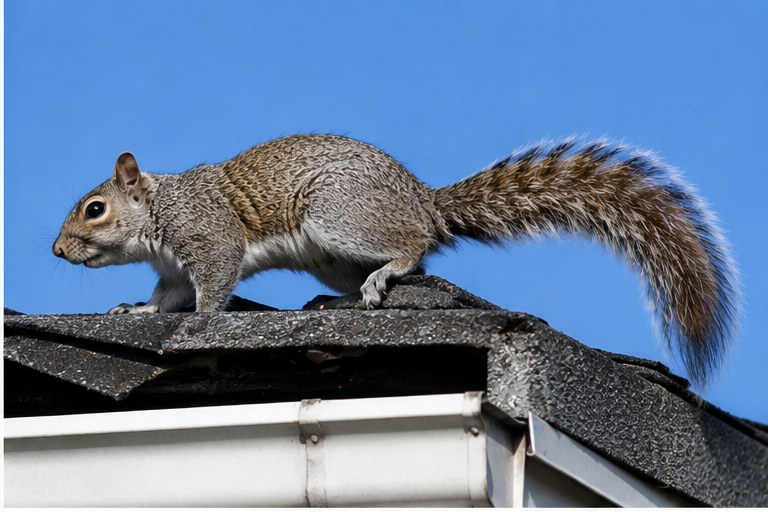
Grey squirrels are a familiar sight in gardens and trees around Bricket Wood, but when they find their way into a loft space, they can quickly become a destructive and noisy problem. Agile and persistent, grey squirrels are capable of exploiting small gaps in roofing and are strong enough to widen weak points to gain entry, making lofts an appealing, sheltered spot to nest, particularly during colder months of the year when other food and shelter is scarcer outdoors and warmth becomes harder to find.
Signs squirrels have moved into your loft
- Scratching, scurrying or thumping noises from the loft, especially early morning and dusk
- Gnawed timber, joists or electrical cabling visible during a loft inspection
- Insulation that has been pulled apart or flattened into a nest shape
- Visible entry points such as damaged fascia boards, soffits or gaps around roof tiles
- Droppings or a musty smell noticeable when entering the loft space
Why squirrels in a loft are a serious concern
Beyond the noise and disturbance, grey squirrels can cause genuine structural damage over time if left to establish themselves. Their gnawing can weaken roof timbers and, more seriously, damage electrical cabling, which carries a real fire risk if left unaddressed for any length of time. Insulation disturbed by nesting activity also loses much of its effectiveness, which can affect the warmth and energy efficiency of your home throughout the colder months, adding an ongoing cost to your household long after the squirrels themselves have first moved in and settled. Water tanks and pipework stored in the loft can also be damaged by gnawing or nesting material, occasionally leading to leaks that are only discovered once the ceiling below is affected.
Why DIY removal rarely works and what actually resolves it
Grey squirrels are intelligent and resourceful, and simply blocking one entry point often leads them to find or create another nearby within the same roofline. Removing squirrels safely and effectively requires an understanding of their behaviour and the correct approach to ensure they do not simply return once initial efforts have been made, which is why many attempted DIY solutions fall short of a lasting fix and the noise and damage resurfaces within a matter of weeks. Effectively dealing with squirrels in a loft involves identifying how they are gaining access, addressing the animals present, and then securing the property to prevent re-entry through the same route in future, rather than treating the issue as a one-off task that ends once the immediate noise has stopped.
Proofing weak points such as damaged fascias, soffits and roof gaps is an essential final step, since without it, the same access route is likely to be used again by squirrels in future seasons. Prompt action helps limit the damage caused to timber, cabling and insulation before it becomes more costly to put right, and gives you peace of mind that the loft is properly secured going forward. Concerned about squirrels in your Bricket Wood loft? Call Atlas Pest Connect St Albans on 01727 400154 for expert assessment and effective, lasting removal.
Need Squirrel Control in Bricket Wood?
Atlas Pest Connect St Albans provides squirrel control across Bricket Wood and the surrounding area. Get in touch for a free, no-obligation quote.