
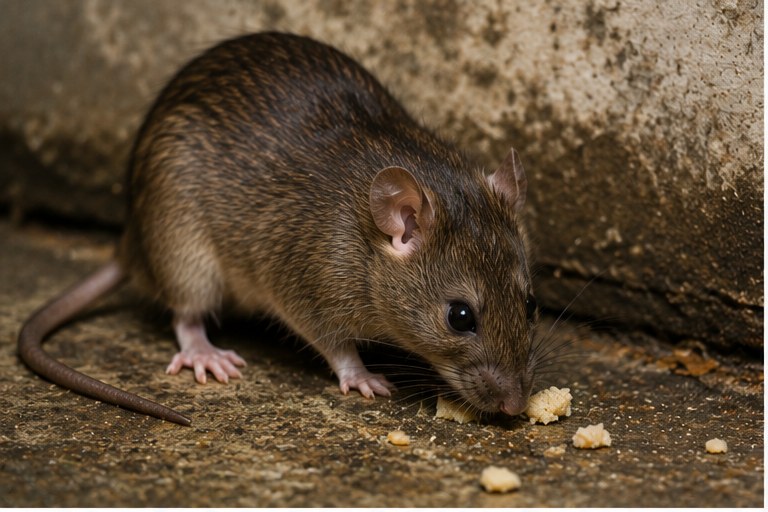
Rats are a fairly common sight around gardens, sheds, and outbuildings in Brookmans Park, particularly near compost heaps, bird feeders, or areas close to watercourses and hedgerows. While they're understandably unwelcome, and can sometimes find their way from a garden into the house itself, dealing with rats effectively starts with correctly identifying the signs early and understanding why they're attracted to a particular property in the first place.
Signs You May Have Rats
Rats are cautious animals and tend to avoid open spaces where possible, preferring to stay close to cover, so you may notice indirect signs before ever seeing one directly. Common indicators include burrows or holes around decking, sheds, compost bins, or the base of fences, gnaw marks on garden furniture, bins, or timber structures, dark, capsule-shaped droppings near sheds, garages, or food sources, greasy rub marks along frequently used routes such as fence lines or pipework, and rustling or scratching noises coming from under decking or sheds after dark.
- Burrows or holes near sheds, decking, compost bins, or garden fence lines
- Gnaw marks on garden furniture, bins, or timber structures
- Dark, capsule-shaped droppings near sheds or food sources
- Rustling or scratching noises from under decking or sheds after dark
Why They're Attracted to a Property
Rats are drawn to a reliable source of food, water, and shelter, and a garden that offers all three is likely to attract repeat visits. Bird feeders, unsecured compost, accessible bins, and pet food left outside overnight can all provide an easy meal, while sheds, log piles, dense vegetation, and gaps under decking offer shelter close by, undisturbed by people or pets. Keeping bins secured with tight-fitting lids, avoiding pet food left outside overnight, using enclosed compost bins rather than open heaps, trimming back dense vegetation that offers cover close to the house, and sealing obvious gaps around the base of sheds and pipework can all help make a property considerably less appealing to rats looking for a new home.
Why DIY Approaches Often Fall Short
Rats are intelligent and highly adaptable, and can quickly become wary of traps or bait that haven't been positioned correctly, learning to avoid them altogether once they sense something is amiss. An established population can also be considerably more extensive than it first appears, with burrows and regular routes extending beyond a single garden into neighbouring properties, sheds, or nearby hedgerows and watercourses. A professional assessment allows the full scale of the problem to be properly understood and treated appropriately, rather than only addressing the rats that happen to be visible at the time, which often leaves much of the wider population untouched and free to keep breeding. If you've noticed any signs of rats around your Brookmans Park property, it's best to act promptly rather than wait for the problem to grow further. Atlas Pest Connect St Albans can carry out a thorough inspection of the property and recommend an effective, targeted approach. Call us today on 01727 400154 to arrange the support you need.
Need Rat Control in Brookmans Park?
Atlas Pest Connect St Albans provides rat control across Brookmans Park and the surrounding area. Get in touch for a free, no-obligation quote.