
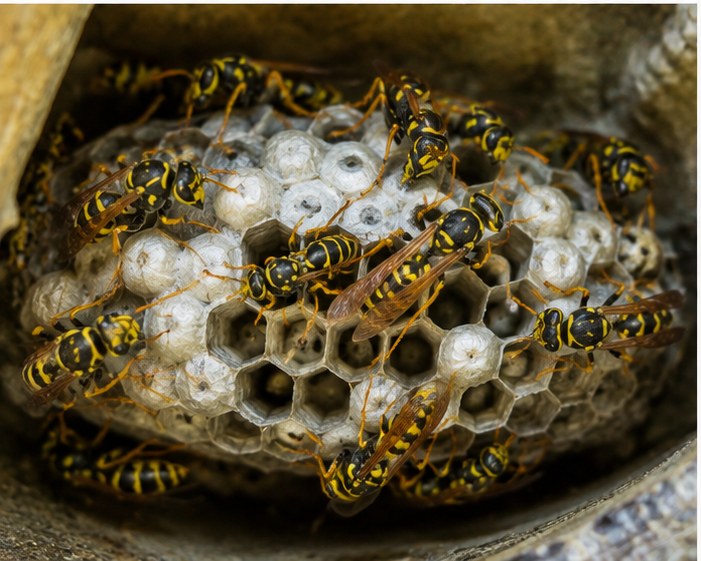
As summer progresses, wasp activity around Welham Green homes tends to increase, and it can be difficult to know whether you are simply seeing more wasps passing through the garden or dealing with an active nest nearby. Recognising the signs early can help you address the problem before it becomes more troublesome.
Increased Wasp Activity
A few wasps in the garden on a warm day is normal, but a consistent, repeated presence of wasps flying in and out of a particular area, especially in a steady line, is a strong indicator that a nest is established close by. Watching where wasps consistently fly to and from can often help narrow down the general location.
Where Nests Are Commonly Found
- Loft spaces and roof voids, where warmth and shelter are ideal for nest building
- Wall cavities, particularly around air bricks or damaged pointing
- Sheds, garages and outbuildings
- Underground, in old rodent burrows or loose soil
- Overhanging eaves, gutters and behind cladding
What a Nest Looks Like
A wasp nest has a distinctive papery, grey or beige appearance, often described as similar to layered cardboard, and is built from chewed wood fibres mixed with saliva. Nests are typically rounded and can range from the size of a golf ball early in the season to considerably larger as summer progresses and the colony grows.
Sounds and Other Signs
A persistent buzzing sound coming from within a wall, loft or roof space can indicate an active nest nearby, even if the nest itself is not visible. Small amounts of debris, such as chewed wood pulp or shredded fibres, near suspected entry points can also be a sign of nest-building activity.
Why Caution Is Important
Wasps become more defensive as a nest grows, particularly later in the season, and disturbing a nest, even accidentally, can prompt a defensive response. It is best to avoid approaching or attempting to treat a nest yourself, especially in enclosed or hard-to-reach spaces.
Seasonal Changes in Wasp Behaviour
Wasp colonies grow throughout the summer, and by late summer a nest that started small in spring may house a substantial number of wasps. Behaviour also tends to shift later in the season, as the natural food sources wasps rely on become scarcer, making them more likely to investigate bins, outdoor eating areas and sugary drinks. Recognising that a nest identified early in the year is likely to grow considerably larger if left untreated is an important reason to act sooner rather than later.
Wasps Versus Bees
It can sometimes be difficult to tell wasps and bees apart, particularly at a distance, but the two require quite different approaches. Wasps tend to have smooth, shiny bodies with distinct yellow and black banding, while many bee species appear fuzzier and rounder. If you are uncertain which insect you are dealing with, a professional assessment can confirm this quickly and recommend the appropriate next steps.
If you believe there is a wasp nest on or around your Welham Green property, contact Atlas Pest Connect St Albans on 01727 400154 for a safe, professional assessment and effective removal.
Need Wasp Control in Welham Green?
Atlas Pest Connect St Albans provides wasp control across Welham Green and the surrounding area. Get in touch for a free, no-obligation quote.