
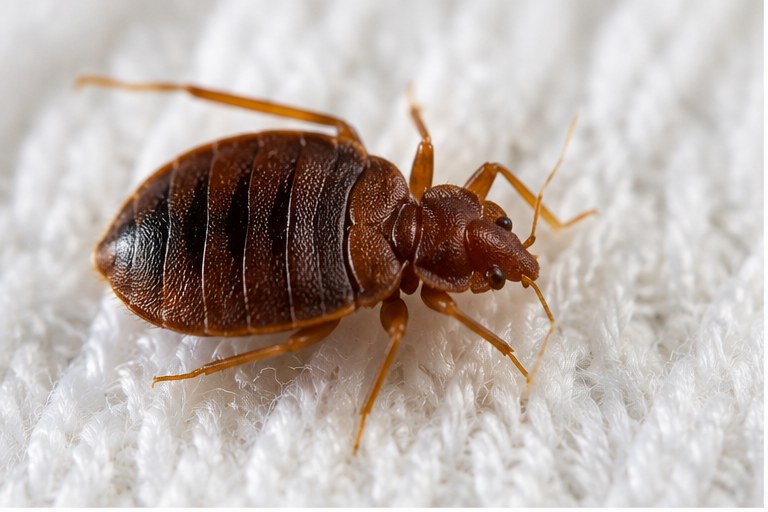
Bed bugs are small, resilient insects that can appear in any home, regardless of how clean or tidy it is kept. They are excellent hitchhikers, often arriving in luggage, second-hand furniture, or clothing after travel or visits from guests. Because they hide so effectively during the day, many St Albans residents do not realise they have a problem until the infestation has already grown, which makes early identification particularly important.
What Bed Bugs Look Like
Adult bed bugs are small, flat, oval-shaped insects with a reddish-brown colouring, roughly the size of an apple seed. After feeding, their bodies swell and become a darker, more elongated shape. Young bed bugs, known as nymphs, are much smaller and paler, sometimes almost translucent, which makes them easy to miss during a casual inspection. Eggs are tiny, whitish, and often tucked into seams and crevices where they are hard to spot without close inspection.
Common Signs to Look For
Because bed bugs are nocturnal and skilled at hiding, most people notice the signs they leave behind before they see the insects themselves. Look carefully around mattress seams, bed frames, headboards, and skirting boards near sleeping areas.
- Small reddish or rust-coloured spots on bedding or mattresses, caused by crushed bugs or blood
- Dark or black spotting on sheets and mattress seams, which is bed bug excrement
- Tiny pale, shed skins left behind as nymphs grow
- A musty, sweetish odour in heavily infested rooms
- Clusters of small, itchy bites on the skin, often in a line or grouped pattern, appearing after sleep
Where to Check in Your Home
Bed bugs are not limited to beds, despite the name. They often shelter in the seams of upholstered furniture, along skirting boards, behind picture frames, inside electrical sockets, and in the folds of curtains. If you suspect a problem, a thorough check should extend beyond the bedroom to any room where people regularly sit or sleep, including sofas in living rooms.
How Bed Bugs Spread Within a Property
Once established, bed bugs do not stay confined to a single room for long. They can travel through wall cavities, along skirting boards, and via shared pipework in flats and houses with multiple occupants, which is why a problem in one bedroom can gradually appear in others nearby. Items moved between rooms, such as laundry baskets, bags, or furniture, can also carry bed bugs and their eggs from one space to another, making it worthwhile to check adjoining rooms if you find signs in one part of the home.
Why Early Identification Matters
Bed bugs reproduce quickly, and a small localised issue can spread to multiple rooms within a matter of weeks if left unaddressed. Because they are so good at hiding and can survive for extended periods without feeding, DIY attempts to eliminate them are often only partially successful, allowing the population to bounce back. Correct identification early on, followed by a thorough professional treatment, gives you the best chance of resolving the issue fully and stopping it spreading to neighbouring rooms or properties.
If you have noticed any of these signs in your St Albans home, do not wait for the problem to grow. Atlas Pest Connect St Albans can carry out a careful inspection to confirm whether bed bugs are present and advise on the right next steps. Call us today on 01727 400154 for friendly, professional support.
Need Bed Bug Extermination in St Albans?
Atlas Pest Connect St Albans provides bed bug extermination across St Albans and the surrounding area. Get in touch for a free, no-obligation quote.