Clothes moths are a quietly destructive pest that can cause significant damage to wardrobes, carpets, and soft furnishings before homeowners even realise they are there. Unlike many household pests, it is not usually the adult moths themselves that cause the damage, but their larvae, which feed on natural fibres. Knowing what to look for can help St Albans residents catch an infestation early, before treasured garments and furnishings are ruined.
What Clothes Moths Look Like
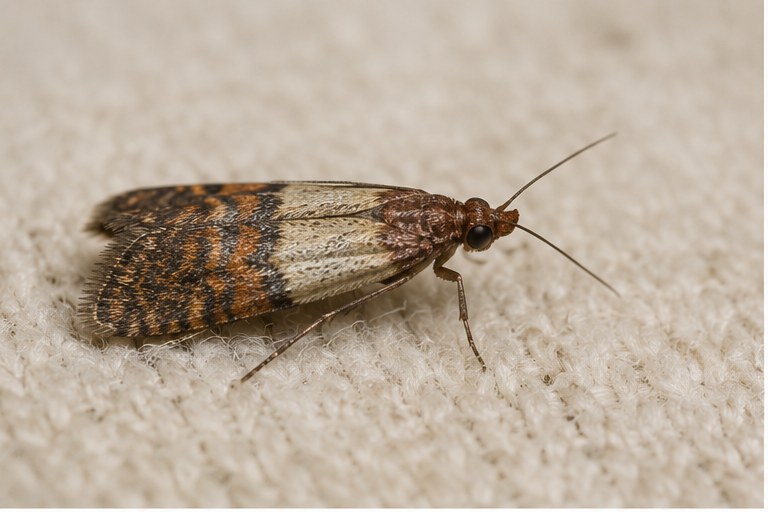
Adult clothes moths are small, generally no more than a centimetre in length, with a golden or buff-coloured appearance and a faintly glossy sheen to their wings. Unlike the moths that gather around outdoor lights at night, clothes moths tend to avoid bright light and prefer dark, undisturbed spaces such as the back of wardrobes, under furniture, or in rarely used drawers. It is often the larvae, small cream-coloured grubs, that are found nestled within the fabric itself, along with fine silken threads or small cocoon-like cases.
Signs of Textile Moth Damage
- Irregular holes in wool, silk, fur, feathers, or other natural fibre items
- Small silken tunnels or webbing on the surface of fabric
- Fine, sand-like debris or larval casings on shelves or in drawers
- Thinning or bald patches in carpets, particularly under furniture or along skirting boards
- Adult moths seen resting on walls or fluttering weakly when disturbed
Where Clothes Moths Like to Hide
Clothes moths favour natural animal fibres such as wool, cashmere, silk, and fur, but they can also damage mixed-fibre fabrics. They are commonly found in wardrobes, under beds, within carpets in low-traffic areas, inside storage boxes, and among items that are stored for long periods without being aired or moved. Because they thrive in undisturbed conditions, seasonal clothing packed away for months at a time is particularly at risk.
Telling Clothes Moths Apart From Other Moths
Not every moth spotted in the home is a clothes moth, and it can help to know the difference before deciding on a course of action. Clothes moths are generally smaller and plainer in colour than many garden or outdoor moth species, and rather than being attracted to lights in the evening, they tend to scurry away from bright rooms toward dark, sheltered corners. If you regularly see small moths low down near skirting boards, wardrobes, or carpets rather than around windows and lampshades, this is a stronger indication that clothes moths, rather than another species, are present.
Why Early Action Makes a Difference
Clothes moth populations can grow steadily if left unchecked, and by the time damage becomes obvious, larvae may already be established in several areas of the home. Regularly checking stored clothing, rotating and airing garments, and vacuuming carpets and skirting boards thoroughly can help reduce the risk. However, once an infestation has taken hold, these measures alone are rarely enough to fully resolve the problem, particularly in carpets or hard-to-reach areas.
Get Professional Help in St Albans
If you have noticed holes appearing in clothing, unexplained webbing, or small moths around your home, it is worth having the situation assessed properly before more items are damaged. Atlas Pest Connect St Albans can help identify the extent of a textile moth problem and recommend an effective course of action tailored to your home. Call us on 01727 400154 to speak to a friendly local expert today.
Need Textile Moth Control in St Albans?
Atlas Pest Connect St Albans provides textile moth control across St Albans and the surrounding area. Get in touch for a free, no-obligation quote.