
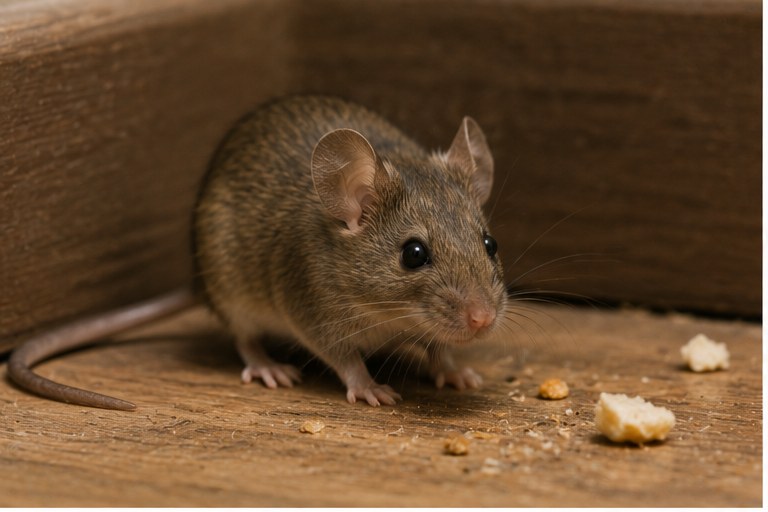
Mice are one of the most common uninvited guests in homes across Brookmans Park, especially as the weather turns cooler in autumn and winter and they look for warm, sheltered places to nest away from the elements. Because they're mostly active at night and naturally cautious around people, you may hear or see evidence of mice well before you ever spot one in person. Recognising the early signs can help you act quickly, before a small problem becomes a much larger one that's harder, and more disruptive, to resolve.
Sounds and Physical Signs
One of the first clues many homeowners notice is noise, particularly at night when the house is quiet. Listen for scratching, scurrying, or light scampering sounds coming from wall cavities, under floorboards, or within loft spaces, often more noticeable in the evening as mice become active and start moving around in search of food. Alongside this, look for small dark droppings roughly the size of a grain of rice near food sources and along regular routes, gnaw marks on food packaging, cardboard, or wiring, greasy smear marks along walls and skirting boards where mice repeatedly brush past, and a stale, musty smell in confined spaces such as cupboards, airing cupboards, or under kitchen sinks.
- Scratching, scurrying, or scampering sounds, especially at night
- Small, dark droppings roughly the size of a grain of rice, found near food sources
- Gnaw marks on food packaging, cardboard boxes, cabling, or wooden skirting boards
- Greasy smear marks left along frequently used walls and routes
Nesting Materials and Entry Points
Mice build nests from soft, shredded materials, so torn paper, fabric, insulation, or cardboard gathered into a small pile in a hidden corner can be a strong indicator of nesting activity nearby, usually in a warm, undisturbed spot close to a reliable food source such as a kitchen, pantry, or utility room. Mice can squeeze through remarkably small gaps, often no larger than a coin, so it's worth checking carefully around external pipework, air bricks, gaps under doors, and where cables or ventilation ducts enter the property. Once inside, they often travel along the same routes repeatedly, sticking close to walls rather than crossing open floor space, which is why signs tend to cluster along particular walls and skirting boards rather than being spread randomly throughout a room.
Acting Quickly Matters
Mice breed quickly, so what starts as one or two animals exploring a new food source can become a much larger, well-established problem within a matter of weeks if left unaddressed, particularly once a safe nesting spot has been found. If you've noticed any of these signs in your Brookmans Park home, it's worth having the property inspected properly rather than waiting to see if the noises stop on their own, which they rarely do without intervention. Atlas Pest Connect St Albans can help identify entry points, confirm the extent of an infestation, and put an effective, humane treatment plan in place. Call us today on 01727 400154 for prompt, professional support.
Need Mice Control in Brookmans Park?
Atlas Pest Connect St Albans provides mice control across Brookmans Park and the surrounding area. Get in touch for a free, no-obligation quote.