
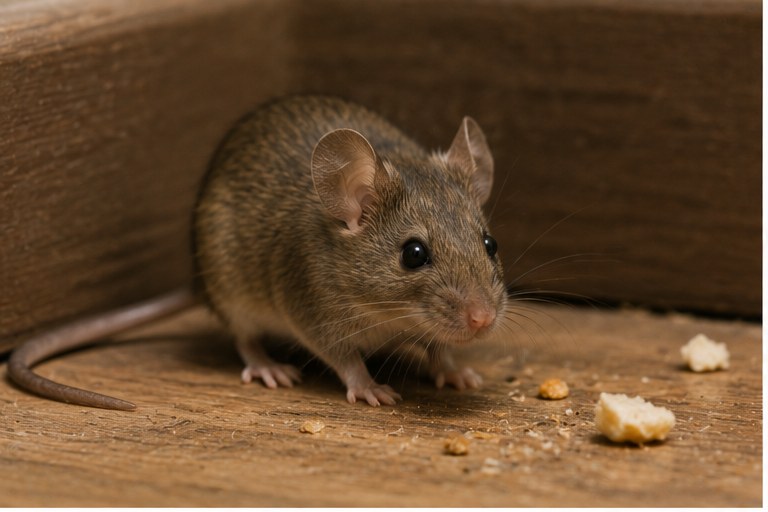
Mice are one of the most common pests to find their way into St Albans homes, particularly as the weather turns cooler and they seek out warmth, shelter, and an easy source of food. A small mouse problem can grow quickly, as they breed at a fast rate, so knowing how to spot the signs early and respond effectively is important for keeping your home comfortable and hygienic.
Signs of a Mouse Problem
Mice are naturally cautious and tend to stay hidden during the day, so most homeowners notice the signs they leave behind before spotting the animals themselves.
- Small, dark, rice-shaped droppings, particularly near food storage areas or along skirting boards
- Scratching or scuttling sounds within walls, ceilings, or under floorboards, especially at night
- Gnaw marks on food packaging, furniture, or wiring
- A stale, musky odour in enclosed spaces such as cupboards or lofts
- Small entry holes, often no larger than a coin, around pipework or skirting boards
Why Mice Get Into Homes
Mice are drawn indoors by the promise of warmth, nesting material, and accessible food. They are remarkably good at squeezing through small gaps, and older properties with airbricks, cavity walls, or gaps around pipework can be particularly vulnerable. Once inside, they will often nest in quiet, undisturbed areas such as lofts, wall cavities, or behind kitchen appliances, venturing out mainly at night to forage.
Steps to Help Manage the Problem
Reducing access to food and potential nesting sites is a sensible first step. Store food in sealed containers, clear away crumbs and spills promptly, and keep clutter in lofts and garages to a minimum. Sealing obvious external gaps can also help reduce the chances of new mice getting in, though mice are persistent and can exploit even very small openings, so this alone is rarely enough to solve an existing infestation.
The Risks of Leaving Mice Untreated
Beyond the disturbance of hearing them at night, mice can pose genuine hygiene concerns by contaminating food and surfaces as they move around a home. They can also cause practical damage by gnawing through wiring, insulation, and stored belongings in lofts or cupboards. Because a single pair of mice can lead to a much larger population within a short space of time, what starts as a minor annoyance can escalate into a far more difficult problem if it is left unaddressed for too long.
Why Professional Treatment Is Often Needed
Mice breed quickly, and a handful of mice can become a much larger population within a matter of weeks if left unaddressed. DIY traps can help with isolated sightings, but established infestations often involve multiple nesting sites and entry points that are difficult to locate and treat comprehensively without experience. A thorough approach identifies where mice are entering and nesting, removes the current population, and helps prevent them returning.
Get Help From a Local Expert
If you suspect mice have moved into your St Albans home, acting promptly gives you the best chance of resolving the problem before it grows. Atlas Pest Connect St Albans can carry out a thorough inspection, identify entry points, and put together an effective plan to clear your home of mice. Call us today on 01727 400154 for friendly, professional advice.
Need Mice Control in St Albans?
Atlas Pest Connect St Albans provides mice control across St Albans and the surrounding area. Get in touch for a free, no-obligation quote.