
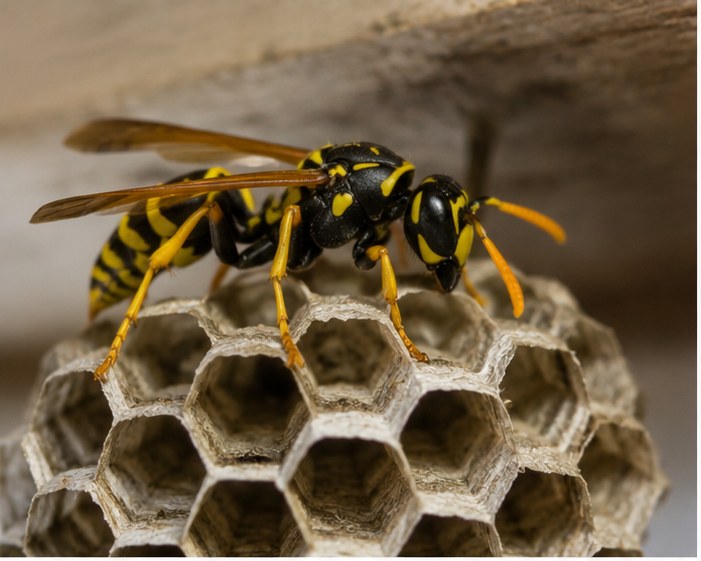
Wasps are a familiar sight in St Albans gardens during the warmer months, and while the occasional wasp is generally harmless, an established nest close to the home can quickly become a real concern, particularly for households with children, pets, or anyone with an allergy to stings. Knowing how to identify a nest, understand wasp behaviour, and respond safely can make a significant difference in keeping your garden usable and your family comfortable.
Signs of a Wasp Nest Nearby
A noticeable increase in wasp activity around your home is usually the first clue that a nest is nearby. Wasps tend to follow consistent flight paths to and from their nest, so watching where they repeatedly enter and exit can help narrow down its location.
- A steady stream of wasps flying in and out of a specific gap or opening
- A faint papery, rustling sound coming from inside walls, sheds, or roof spaces
- A visible grey, papery structure in sheltered spots such as eaves, lofts, or hedges
- Increased wasp activity around bins, outdoor eating areas, or fallen fruit
Where Wasps Commonly Build Nests
Wasps favour sheltered, undisturbed locations that offer protection from the elements. Common nesting sites around St Albans homes include loft spaces, wall cavities, garden sheds, under eaves, and within dense hedging or overgrown areas of the garden. Nests often start small in spring but can grow substantially larger over the summer as the colony expands, which is why nests discovered early tend to be more straightforward to deal with.
Why You Should Avoid Tackling a Nest Yourself
It can be tempting to deal with a wasp nest using shop-bought sprays or by attempting to knock it down, but this approach carries real risk. Disturbing a nest without the right knowledge and protection can provoke a large, defensive response from the colony, leading to multiple stings in a short space of time. Nests in awkward locations, such as high up under eaves or deep within cavity walls, are also difficult to treat fully without proper access and equipment, meaning a botched attempt can leave the colony intact and even more agitated.
Understanding Wasp Behaviour Through the Seasons
Wasp colonies follow a fairly predictable pattern each year. A queen begins building a small nest in spring, and as worker wasps emerge, the colony grows steadily through the summer months, reaching its largest size in late summer before naturally declining as autumn approaches. This means a nest spotted in early summer is likely to keep growing if left untreated, while wasps can also become noticeably more aggressive and persistent later in the season as the colony matures and food sources become scarcer.
Simple Ways to Reduce Wasp Activity
While a nest itself needs proper treatment, there are steps you can take to reduce general wasp activity in your garden. Keep bins sealed and emptied regularly, clear away fallen fruit promptly, and avoid leaving sweet drinks or food uncovered outdoors during warmer weather. These measures will not remove an existing nest, but they can help make your garden less attractive to foraging wasps in the meantime.
Get Safe, Professional Help
If you suspect a wasp nest on or near your St Albans property, it is safest to leave removal to a trained professional with the right equipment and experience. Atlas Pest Connect St Albans can locate and safely treat wasp nests, helping you enjoy your garden again without the worry of stings. Call us today on 01727 400154 for prompt, professional assistance.
Need Wasp Control in St Albans?
Atlas Pest Connect St Albans provides wasp control across St Albans and the surrounding area. Get in touch for a free, no-obligation quote.