
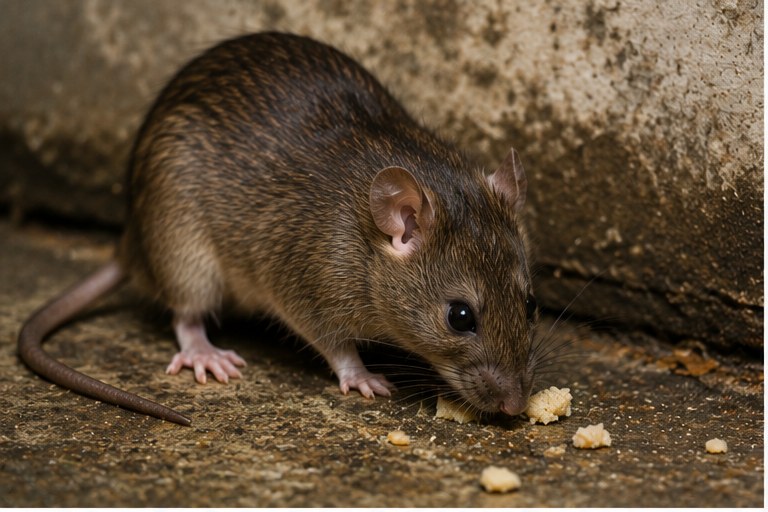
Rats are a common concern for homeowners and businesses across St Albans, particularly in gardens, sheds, and properties near watercourses or dense vegetation. They are cautious, mainly nocturnal animals, which means many people do not realise rats are present until a fairly clear pattern of signs has built up. Being able to recognise these early warning signs can help you respond quickly and avoid a larger, more established problem.
Signs Around the Outside of Your Property
Rats are strong burrowers and tend to leave visible evidence outdoors, especially around sheds, compost heaps, decking, and garden boundaries.
- Burrow holes, typically around the size of a tennis ball, near fences, sheds, or decking
- Smear marks along regularly used routes, caused by dirt and grease on their fur
- Gnawed damage to garden furniture, bins, or wooden structures
- Trampled vegetation forming visible runs through grass or undergrowth
- Droppings, which are larger and more capsule-shaped than those of mice
Signs Inside the Home
Rats can and do move indoors, particularly during colder months or when food sources outside become scarce. Listen for scratching or scurrying sounds within walls, under floors, or in lofts, especially after dark when rats are most active. Gnaw marks on skirting boards, wiring, or stored items are another common indicator, as rats need to gnaw regularly to keep their teeth at a manageable length.
Why Rats Are Drawn to a Property
Rats are opportunistic and will settle wherever food, water, and shelter are easily accessible. Bird feeders, unsecured bins, compost heaps, and pet food left outdoors can all attract attention, while gaps around pipework, airbricks, or damaged brickwork provide convenient access points into buildings. Properties near watercourses, allotments, or areas with dense vegetation can be particularly susceptible due to the natural cover these environments provide.
Telling Rats and Mice Apart
It is not always obvious at first glance whether a property has rats or mice, but there are some helpful clues. Rat droppings tend to be noticeably larger and more capsule-shaped than the smaller, thinner droppings left by mice, and rat burrows are considerably bigger than the small gaps mice can squeeze through. Rats are also generally more cautious around new objects in their environment, which can make them slower to approach traps than mice. If you are unsure which pest you are dealing with, a professional assessment can confirm this quickly and guide the right approach.
Why Acting Quickly Matters
Rats breed quickly and can establish burrows and nesting sites within a short space of time, so a small early sign should not be ignored. Beyond the disturbance and damage they can cause, rats are also known to gnaw through cabling and pipework, which can lead to more serious issues if left unresolved. Identifying signs early gives you the best opportunity to deal with the problem before it becomes larger and more difficult to manage.
Contact a Local Rat Control Expert
If you have noticed burrows, droppings, or gnawing around your St Albans property, it is worth having the situation properly assessed rather than waiting to see if it resolves itself. Atlas Pest Connect St Albans can identify the extent of rat activity and recommend the right course of action for your home or business. Call us today on 01727 400154 to speak with a local expert.
Need Rat Control in St Albans?
Atlas Pest Connect St Albans provides rat control across St Albans and the surrounding area. Get in touch for a free, no-obligation quote.